Full Bathroom Remodel
Gut it, rebuild it right — demolition, what's behind the walls, tile, fixtures, and the final coat of paint, all coordinated.
Explore this service →Bathroom remodeling for Suffolk homes
From downtown Victorians and Driver farmhouses to mid-century ranches and newer North Suffolk homes, we plan bathrooms around the way the house was built—and the way your family lives now.
Not a copy-paste template
Between the Nansemond River, downtown's old commercial blocks, the peanut fields further out, and North Suffolk's newer subdivisions, this city covers a lot of building eras in a fairly small radius. Whatever era your house belongs to, our approach stays the same: keep the details worth keeping, plan around Tidewater humidity and whatever the original framing is doing, and bring the wet areas up to a modern standard.
See why that matters →Pick your starting point
Each service page below walks through scope, the decisions you'll face, and what tends to come up specifically in Suffolk homes.
Gut it, rebuild it right — demolition, what's behind the walls, tile, fixtures, and the final coat of paint, all coordinated.
Explore this service →Sized right for how you actually shower, waterproofed correctly, with storage and glass that don't make the room feel smaller.
Explore this service →Swap a tub nobody uses for a low-threshold shower built around your actual routine.
Explore this service →The part nobody notices when it's done right: flat substrates, expansion joints, membranes, and layout that doesn't fight the room.
Explore this service →Clearances, blocking, seating, and grab bars that make the room safer without making it feel like a clinic.
Explore this service →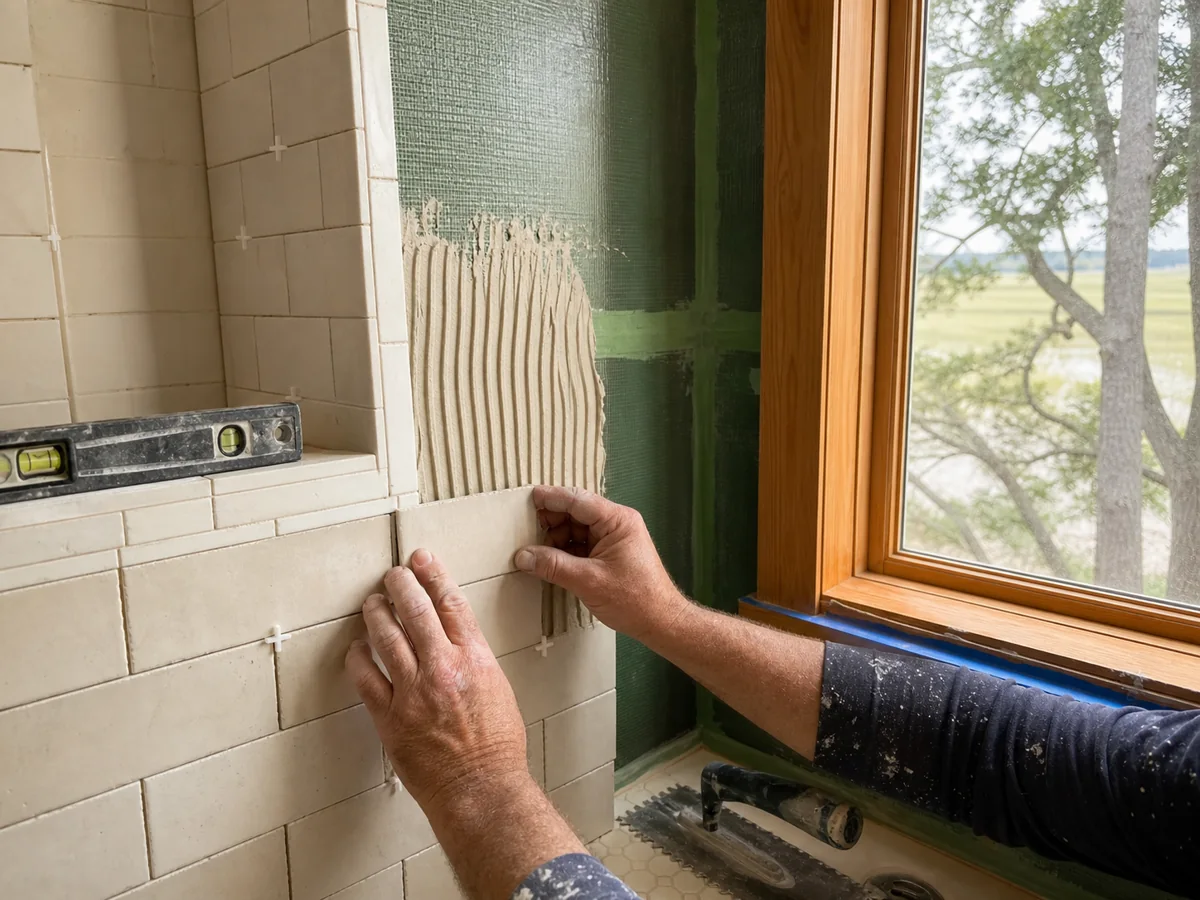
What actually matters
Drainage, ventilation, a flat substrate, and waterproofing that turns corners correctly — that's the actual project. The tile you see afterward is just proof that those things got done right.
A city shaped by river and land
Suffolk’s long building story is visible in downtown’s tall-windowed houses, the farmhouses and village homes around Driver and Chuckatuck, the brick ranches near Holland and Whaleyville, and newer neighborhoods toward Harbour View. We use that story as context—not costume—so new work feels comfortable beside what came before.
What it actually costs
Full remodels around Suffolk typically run $18,000 to $45,000 or more; a lighter cosmetic update can land below that, while moving walls, structural surprises, or premium tile and glass push it higher still.
See what drives the number →Ask this before demo day
Most regret in a remodel traces back to a question nobody asked at the start. These are the ones worth asking.
See the full FAQ →Once materials are on site, a full remodel usually runs three to six weeks. Layout changes, inspection scheduling, and surprises behind old walls can stretch that.
Not a dealbreaker. It's common enough in Suffolk's older housing stock that we plan for selective patching and blending old surfaces with new drywall.
Only if there's a real reason to. Keeping fixtures near the existing supply and drain lines is usually the cheaper path.
Not the tile — it's the membrane underneath, how the seams were sealed, and the slope toward the drain that keep water where it belongs.
Talk to a real person, not a form
Start there. We will pull that back to something buildable once we know your budget and timeline.